


How Many Dudes?
4.3173.00 Reviews
App Specs
- Version
- 100.0.911
- Updated On
- License
- $9.99
- Downloads
- 100,000+
- Developer
- Butterscotch Shenanigans
- Categories
- Strategy
- Platform
- Android
Screenshots
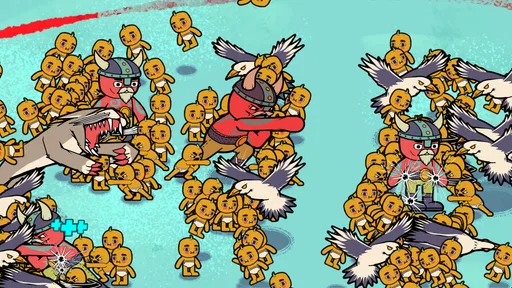
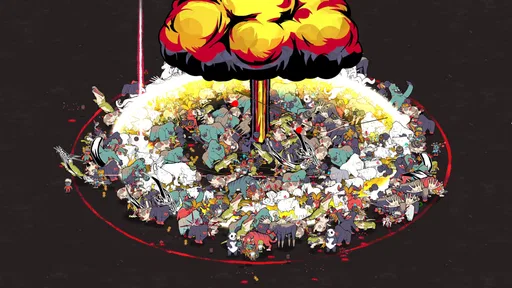
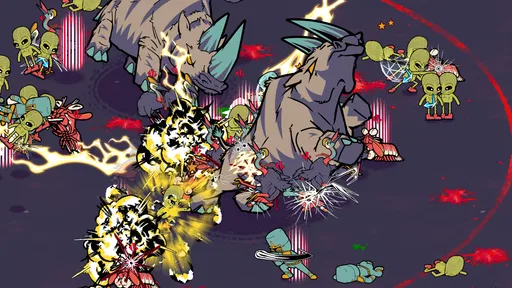
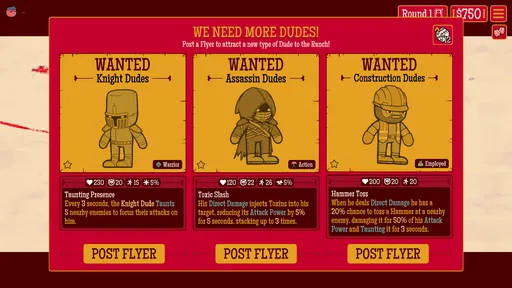
 Analysis by AppCompare
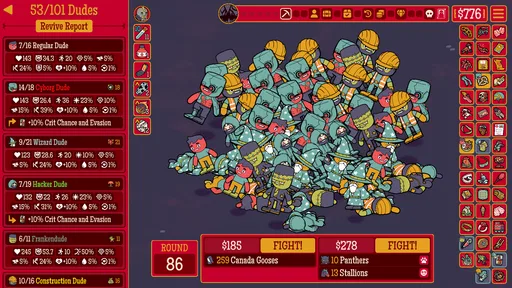
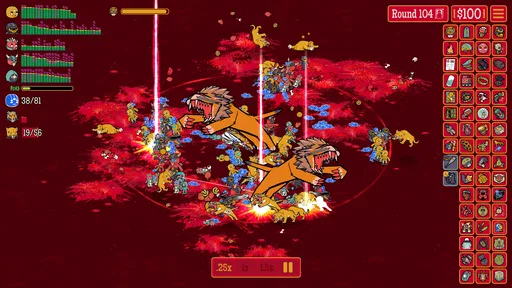
I went into How Many Dudes? expecting a light strategy game built around a deliberately silly idea, and that is exactly where its appeal starts. Developed by Butterscotch Shenanigans, it turns the question in its short store description, “How Many Dudes?”, into a roguelike army-building experience about recruiting a crowd and throwing it into ridiculous battles. The tone is playful, but the category is still strategy: your decisions matter more than simply tapping through a sequence of fights.
The game is listed at $9.99, so this is a paid purchase rather than a free download that later asks you to decide whether to spend. That distinction shaped my experience. I approached each run as something I had already paid to access, not as a storefront built around persuading me to make another purchase. For players who prefer a complete-feeling premium game, that is an important part of the value. For anyone looking for a no-cost way to sample the concept first, the price creates a higher barrier.
How the army-building idea works in practice
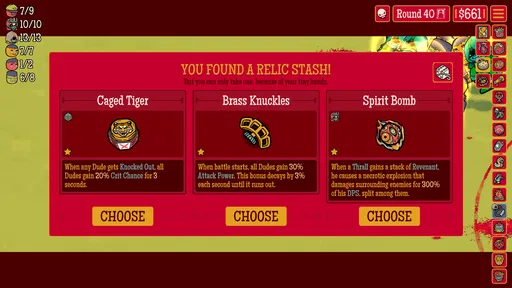
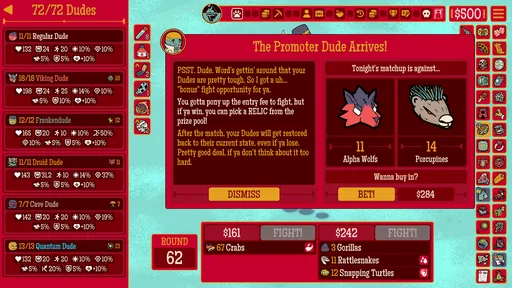
The central hook is easy to understand: recruit Dudes, assemble an army, and use it in battles that are intentionally absurd. What gives the idea staying power is the roguelike structure. A run is not just a fixed campaign where the same choices produce the same result every time. You are constantly judging what is useful now, what may become valuable later, and when a tempting option could leave the whole group less prepared for the next challenge.
I like that this setup makes the word “army” feel more meaningful than a simple headcount. A larger group is not automatically the smartest group. The interesting decisions come from balancing expansion with survival, choosing whether to strengthen a reliable plan or gamble on a stranger one, and accepting that a run can change direction after a single battle. That creates the kind of strategy that is easy to explain to a friend but harder to master than the joke premise suggests.
The roguelike format also makes short sessions feel worthwhile. I can begin a run with a clear intention, see that plan tested, and learn something even when the outcome is poor. That is more satisfying than a linear strategy game where failure mainly means replaying the same section. Here, a failed attempt can reveal that I recruited too broadly, committed too early, or treated a funny-looking option as automatically useful.
Why the silly presentation helps the strategy
Many strategy games use serious military language, grim settings, or elaborate fantasy lore to make every decision feel important. How Many Dudes? takes the opposite route. Its ridiculous premise lowers the pressure around experimentation. I am more willing to try an unusual army composition when the game is clearly having fun with the idea of sending a mass of Dudes into chaos.
That humor is not just decoration. It gives the game a distinct identity in a crowded strategy field. A conventional army builder may offer deeper world-building, more solemn objectives, or a larger roster of recognizable roles. This game instead asks whether the player can turn a deliberately uncomplicated concept into a working machine. The result is approachable without being completely shallow.
Worth Reading Before You Choose

EA SPORTS FC Mobile 26 Is a Bigger Football Game, but It Takes Time

Flipboard Shows What News Apps Must Do Beyond the Feed

Switching to Android Auto Means Rethinking Your Driving Routine

Google Calendar Makes a Crowded Week Easier to Manage

Ludo King Makes the Most of the Minutes Between Plans

Baby Panda World Brings Quick Play to Modern Phones, but Its Game Library Feels Busy
There is also a useful contrast between the comedy and the consequences of a bad decision. The battles may be ridiculous, but losing progress still stings. That tension keeps the humor from making the game feel disposable. I can laugh at the situation and still think carefully about my next recruitment choice.
What I paid for, and how that affects the value
The listed price is $9.99, which places the game in the paid mobile strategy space rather than the free-to-play space. In practical terms, the purchase decision is straightforward: you are deciding whether the core roguelike army-building loop is worth that amount, not whether you want to tolerate a free opening before dealing with repeated monetization prompts.
I consider that a good fit for players who already know they enjoy replayable strategy games. The price is easier to justify when you value runs, experimentation, and learning through failure instead of demanding a long story campaign with a large amount of content. If you mainly want a free casual distraction for a few minutes, paying up front may feel less attractive even if the game itself is well made.
One practical point is that the game’s value depends heavily on how often you replay. A player who finishes one run and moves on may not feel the same return as someone who enjoys testing different army ideas. The roguelike design is therefore both the main source of replay value and the main risk: if repeated attempts feel repetitive to you, the paid model will not be rescued by a large collection of unrelated modes.
The current version is 100.0.911, and the game has a Teen content rating. It is compatible with devices running Android 8.0 or later. Those details matter when deciding whether it fits an older phone or a family device, but they do not tell me how smoothly every handset will run it. I would still check the store page on the exact device before buying, especially if the phone is close to the minimum operating-system requirement.
Three decisions that matter more than they first appear
My first useful lesson was to stop treating recruitment as a simple “more is better” button. Growing quickly can make an army look impressive while leaving it poorly suited to the battles ahead. I found it more effective to ask what the current group was missing before adding another Dude. That small change in thinking turns recruitment into planning rather than collection.
The second lesson is to protect a functioning strategy instead of constantly replacing it with a more entertaining possibility. Roguelike games encourage curiosity, but curiosity can become wasteful when every new option causes me to abandon a stable setup. I get better results when I identify the part of the army that is already working and make changes around it. This is especially useful after a successful battle, when it is tempting to overcorrect just because a new choice looks funny or powerful.
The third is to treat a failed run as a record of priorities, not merely bad luck. After losing, I can usually identify a specific point where I valued immediate growth over flexibility. That makes the next attempt more deliberate. Instead of trying to recreate the previous army, I change one assumption and see whether the run survives longer. This is a more reliable learning method than making several random changes at once.
A realistic everyday session
Imagine having a short break after work and wanting something more engaging than a passive puzzle. I would start a run, make a few recruitment choices, and play until the next major decision or battle. If the run ends, I can put the game down without feeling that I abandoned a long campaign halfway through. When I return later, the appeal is not simply remembering a story beat; it is wondering whether a different army plan will handle the same kind of pressure better.
That makes the game suitable for players who like compact strategic sessions with a clear beginning and end. It is less suitable for someone who wants a calm, predictable activity with no meaningful chance of losing progress. Even in a humorous game, roguelike structure asks the player to accept setbacks.
Where it stands beside other strategy games
Compared with a traditional turn-based strategy game, How Many Dudes? is more focused on the run itself and less dependent on a large map, a long political system, or a detailed campaign narrative. That focus makes it easier to start, but it also means players who love territorial control and extended planning may find the experience narrower.
Compared with a typical free-to-play army collector, the paid structure is a major difference. The game’s appeal is not based on waiting for a timer, managing a shop, or building a routine around repeated purchases. That makes the decision-making feel cleaner to me. On the other hand, players who enjoy long-term collection goals, constant unlocks, or social competition may prefer a larger live-service strategy game.
It also differs from a pure auto-battler. The army may be the visible star, but the strategic interest is in how I shape the group and respond to the run, not merely in watching a prebuilt team fight. If you want to make choices before the battle and learn from their consequences, this is more appealing than a game where preparation is mostly about arranging a lineup and waiting.
Who will get the most from it
I would recommend it to a player who enjoys roguelikes but wants a lighter, more comedic setting. It suits people who like asking “what if I build around this?” and then trying again when the plan collapses. The army concept is simple enough for newcomers to understand, while the run-based decisions give experienced strategy players room to question their habits.
It is also a good match for someone who values premium mobile games. Paying $9.99 makes the most sense when you would rather have one focused purchase than navigate a free-to-play economy. The game’s average rating is 4.3 from over 900 ratings, and it has passed 100K installs, which suggests that the unusual concept has found a real audience without needing to look like a conventional military simulator.
I would be more cautious about recommending it to players who need a strong narrative, a huge variety of locations, or a relaxing game with no repeated failure. The same structure that gives the game replay value can feel cyclical if you do not enjoy rebuilding a plan. I would also skip it if the phrase “roguelike army builder” does not sound appealing, because the humorous presentation cannot completely change the underlying loop.
Small habits that make the game more enjoyable
I recommend entering each run with one question rather than a rigid blueprint. For example, I might focus on whether a compact army can outperform a rapidly expanding one. This keeps the session purposeful without making every choice feel like a test I must pass. It also helps me notice which decisions actually influence the outcome.
I would avoid spending every opportunity on immediate recruitment. Keeping the army adaptable is often more valuable than chasing the biggest possible crowd. When a choice offers a clear improvement to the group’s current weakness, it deserves more attention than an option that merely increases the spectacle.
Finally, I would not judge the game after one unlucky attempt. The point of the roguelike design is that a single run is an experiment, not the entire product. Give it enough time to show whether you enjoy refining decisions across multiple attempts. If you dislike that process after several sessions, the problem is probably the format rather than a temporary bad run.
My buying recommendation
How Many Dudes? is a focused strategy game with a memorable premise, and I think its strongest quality is the way it turns a joke into a genuine decision-making loop. Butterscotch Shenanigans keeps the presentation approachable while allowing recruitment choices, army balance, and repeated attempts to carry the experience. The game does not need a serious war setting to make failure matter.
At $9.99, I see it as a reasonable purchase for players who already know they enjoy roguelike experimentation and want something more playful than standard tactical warfare. The paid price is harder to justify for casual users who only want a free sample or for strategy fans seeking a sprawling campaign. Those are not flaws in the same sense; they are boundaries around the audience.
My verdict is to buy it if the idea of repeatedly building an absurd army sounds entertaining and you are comfortable learning through failed runs. I would skip it if you want a traditional campaign, a free-to-play collection game, or a low-pressure pastime. For the right player, the combination of comedy, replayable strategy, and a direct premium purchase makes this a distinctive mobile game rather than another interchangeable army title.
Pros
- Simple
- quick-to-learn gameplay suitable for short sessions.
- Lighthearted humor gives the game a casual
- entertaining feel.
- Minimal controls make it accessible for most players.
- Runs well on many devices with modest hardware requirements.
- Progression encourages repeated attempts to improve your results.
Cons
- Gameplay may feel repetitive after extended play sessions.
- Limited depth may not satisfy players seeking complex mechanics.
- Ads can interrupt the experience
- depending on the version.
- Some content may appeal less to players who dislike crude humor.
- Replay value depends heavily on personal interest in score improvement.
FAQs for How Many Dudes?
What is How Many Dudes?
How Many Dudes? is a casual counting and guessing game built around estimating how many characters, people, or objects appear in a scene. Its simple premise makes it easy to understand immediately, while the challenge comes from observing carefully and making a quick, accurate choice. It is designed for short play sessions and works well when you want something light and entertaining.
How do you play How Many Dudes?
The main gameplay is straightforward: look at the displayed scene, count the dudes or other visible elements as accurately as possible, and submit your answer. Depending on the level, characters may be grouped closely together or placed in a way that makes counting more difficult. Progress generally depends on accuracy, so taking a moment to inspect the entire screen is more useful than guessing too quickly.
Is How Many Dudes? suitable for children?
How Many Dudes? is generally easy for children to understand because it relies on visual attention, counting, and simple decision-making rather than complicated controls. However, parents should still review the app’s store listing, age rating, advertising, and privacy information before installation. The exact suitability may also depend on the child’s age and tolerance for timed challenges or repeated levels.
Does How Many Dudes? require an internet connection?
The basic counting gameplay may be playable without a constant internet connection, which makes the app convenient for quick sessions while traveling or when mobile data is unavailable. Nevertheless, some features—such as advertisements, analytics, updates, leaderboards, or optional online content—may require connectivity. It is best to test the game in airplane mode after installation if offline access is important to you.
Is How Many Dudes? free to download and does it contain ads?
How Many Dudes? may be offered as a free download, but free games commonly support development through advertising, optional purchases, or both. You should check the current Google Play or App Store listing for the latest pricing and in-app purchase details. Before downloading, also review the permissions and privacy information, especially if the device will be used by a child.


